






A beautiful home is one thing. A home that makes people want to stay awhile is another. For homeowners who love dinner parties, holiday gatherings, weekend barbecues, game nights, and hosting out-of-town guests, the way a residence functions can matter just as much as how it looks.
That is especially true in Orange County, where year-round sunshine and a strong indoor-outdoor lifestyle can turn entertaining into an extension of everyday living. From coastal homes in Newport Beach and Corona del Mar to spacious residences in Irvine, the best homes for entertaining tend to share several characteristics: welcoming gathering spaces, easy circulation, access to the outdoors, and thoughtful separation between public and private areas.
What Makes a Home Great for Entertaining?
A home designed for entertaining should make it easy for people to gather, move between spaces, enjoy food and conversation, and feel comfortable without disrupting the household’s more private areas.
That does not require a massive residence or an elaborate party room. Often, the most successful entertaining homes simply have the right relationship between the kitchen, dining and living spaces, outdoor areas, guest accommodations, and everyday circulation.
1. An Open Kitchen That Invites People to Gather
The kitchen naturally becomes a gathering place during many parties and dinners. Guests often gravitate toward whoever is preparing food, pouring drinks, or putting the finishing touches on a meal. A kitchen that accommodates that interaction can make hosting feel considerably easier.
Look for generous counter space, clear circulation around work zones, and enough room for guests to gather without blocking the cook. A large island can be particularly useful because it provides a place for casual seating, serving, conversation, and food preparation all at once.
In a luxury home, features such as multiple ovens, substantial refrigeration, beverage storage, a walk-in pantry, or secondary prep areas can further support entertaining. But even without those extras, the essential question remains the same: can the host prepare food while still participating in the gathering?
2. Open Living Spaces That Encourage Easy Conversation
The relationship between the kitchen and surrounding rooms matters almost as much as the kitchen itself. Open or visually connected living spaces allow guests to move naturally from one area to another instead of becoming separated into isolated rooms.
A kitchen that flows into the family room and an adjacent dining area can support everything from an intimate dinner to a larger holiday gathering. Guests can sit, stand, mingle, and move between spaces without losing the sense that everyone is part of the same event.
That does not mean every wall needs to disappear. Some homeowners prefer defined rooms for formal dining or quieter conversation. What matters is that the layout feels intuitive and offers enough circulation for the way you actually like to entertain.
3. A Bonus, Media, or Recreation Room for a Second Gathering Space
Separate recreation space can be particularly valuable when several age groups or activities are happening at once. While homes in some parts of the country may use a basement for this purpose, Orange County residences are more likely to feature a bonus room, upstairs loft, media room, game room, wine room, or flexible lounge.
These secondary spaces give guests choices. Adults might gather around the kitchen and dining areas while teenagers watch a movie or play games elsewhere. During a larger event, a bonus room can become a screening room, card room, children’s space, or quieter retreat.
The benefit is flexibility. Instead of asking one room to accommodate every activity, the home can support several experiences simultaneously.
4. Seamless Indoor-Outdoor Living
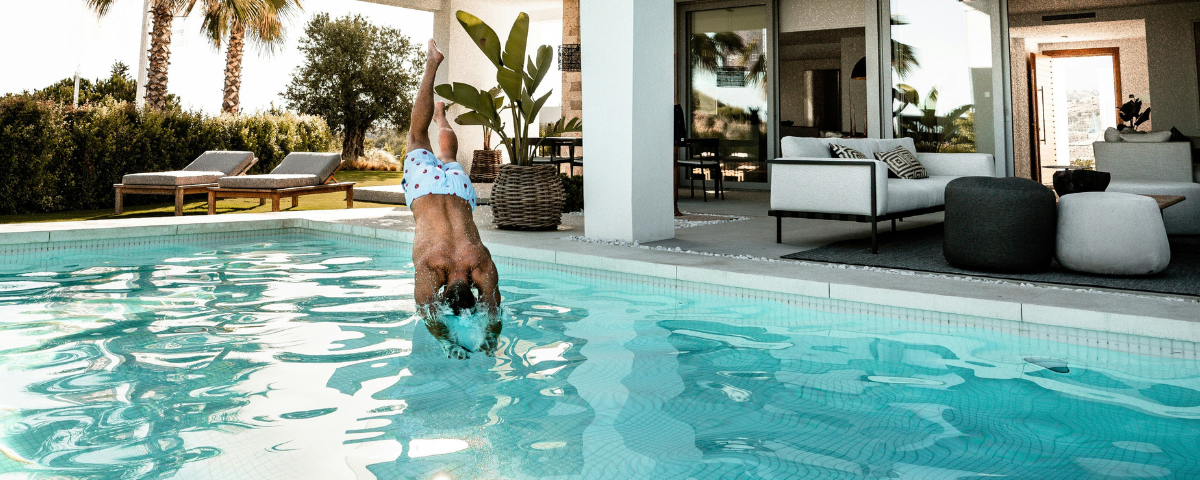
Few entertaining features feel more distinctly Southern Californian than an effortless connection between indoors and outdoors. In Orange County’s temperate climate, patios, terraces, courtyards, pools, and gardens can function as additional living rooms for much of the year.
Large sliding doors, pocket doors, or folding glass walls can help visually and physically connect interior gathering spaces to the backyard. When the flooring, furnishings, sightlines, and seating areas relate to one another, guests naturally move between the two spaces.
This type of indoor-outdoor continuity can be especially compelling in communities such as Laguna Beach, Newport Coast, Dana Point, and Newport Beach, where coastal views and mild evenings can become part of the experience.
5. An Outdoor Kitchen or Dedicated Dining Area
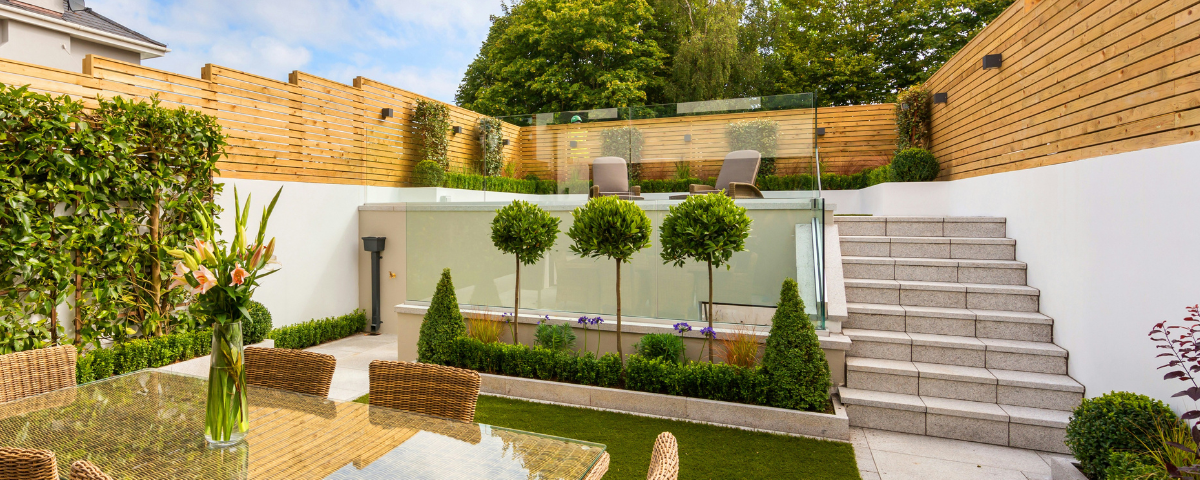
Once guests move outside, having a practical place to prepare and serve food can make entertaining more convenient. An outdoor kitchen might include a built-in grill, refrigeration, sink, storage, pizza oven, bar seating, or simply a well-planned cooking station close to an outdoor dining table.
The ideal setup depends on how often you entertain and what you like to serve. Someone who regularly hosts large weekend gatherings may want a substantial outdoor kitchen, while another homeowner may need little more than a high-quality grill and generous counter space.
Shade also deserves consideration. Covered patios, pergolas, umbrellas, and retractable awnings can make outdoor areas more comfortable during sunny afternoons, while heaters or fire features can extend their use into cooler evenings.
6. A Convenient Powder Room Near Entertaining Areas
A small design decision can make a noticeable difference when guests arrive: the location of the powder room.
Ideally, visitors should be able to access a bathroom from the primary entertaining spaces without walking through bedrooms, private hallways, or other personal areas of the home. A powder room near the kitchen, living room, patio, or main entry allows guests to remain within the public portion of the residence.
This creates a subtle but important separation between entertaining areas and the household’s private spaces. It can also make hosting feel more comfortable for both guests and homeowners.
7. A Private Guest Suite for Overnight Visitors
If entertaining regularly includes family or friends from out of town, guest accommodations become part of the equation. A private guest suite allows visitors to stay comfortably while giving everyone a greater degree of independence.
An en suite bathroom is particularly desirable. Depending on the home, a guest suite may also include a sitting area, separate entrance, kitchenette, patio access, or location away from the primary bedroom wing.
Homes with multigenerational suites, detached casitas, or private guest quarters can offer even greater flexibility. The goal is not simply to provide a place to sleep—it is to create a space where visitors can feel at home without sacrificing the privacy of the people who live there every day.
How Should You Evaluate a Home if You Love to Entertain?
When touring a property, imagine an actual gathering rather than evaluating rooms independently. Where would guests enter? Where would they place coats or bags? Where would drinks be served? Can several people gather around the kitchen without blocking circulation? Can guests move naturally between indoor and outdoor spaces?
Then think about the quieter details. Is there a powder room nearby? Is there enough storage for serving pieces and entertaining essentials? Could children or teenagers have a separate place to gather? Would overnight visitors have privacy?
Walking through these scenarios can reveal much more about a floor plan than simply counting bedrooms, bathrooms, or square footage.
Entertaining Features to Look for at a Glance
| Feature | Why It Works for Entertaining | What to Look For |
|---|---|---|
| Open Kitchen | Keeps the host connected to guests | Large island, generous counters, clear circulation |
| Connected Living + Dining | Encourages guests to mingle naturally | Open sightlines and easy movement between rooms |
| Bonus or Media Room | Supports multiple activities at once | Flexible lounge, game, media, or recreation space |
| Indoor-Outdoor Connection | Expands usable gathering space | Sliding or pocket doors, patios, terraces, courtyards |
| Outdoor Kitchen + Dining | Makes outdoor hosting more convenient | Grill, prep space, refrigeration, seating, shade |
| Powder Room | Keeps visitors out of private bedroom areas | Convenient location near primary gathering spaces |
| Guest Suite | Provides privacy for overnight visitors | En suite bath and separation from primary bedrooms |
Entertaining at Home, Orange County Style
The best entertaining home is ultimately the one that matches the way you like to live. A serious home chef may prioritize a generous kitchen and outdoor cooking area. A family that frequently welcomes overnight visitors may place greater value on a private guest suite. Someone who hosts large gatherings may care most about circulation and indoor-outdoor flow.
Orange County’s climate makes those possibilities particularly appealing. A dining room can open to a courtyard. A kitchen can connect to a pool terrace. A great room can frame sunset views while guests move easily between the indoors and outdoors.
When buying a home, look beyond individual finishes and consider how the entire property supports the experiences you want to create. And if you are preparing to sell, highlighting entertaining-friendly features can help prospective buyers understand not just what the home contains, but how it can be lived in.